Want to Support an Independent Musician? Here's What Actually Helps
I don't tour, so the ways people support my music look a little different. Here's what makes a real difference, and why most of it doesn't cost a thing.
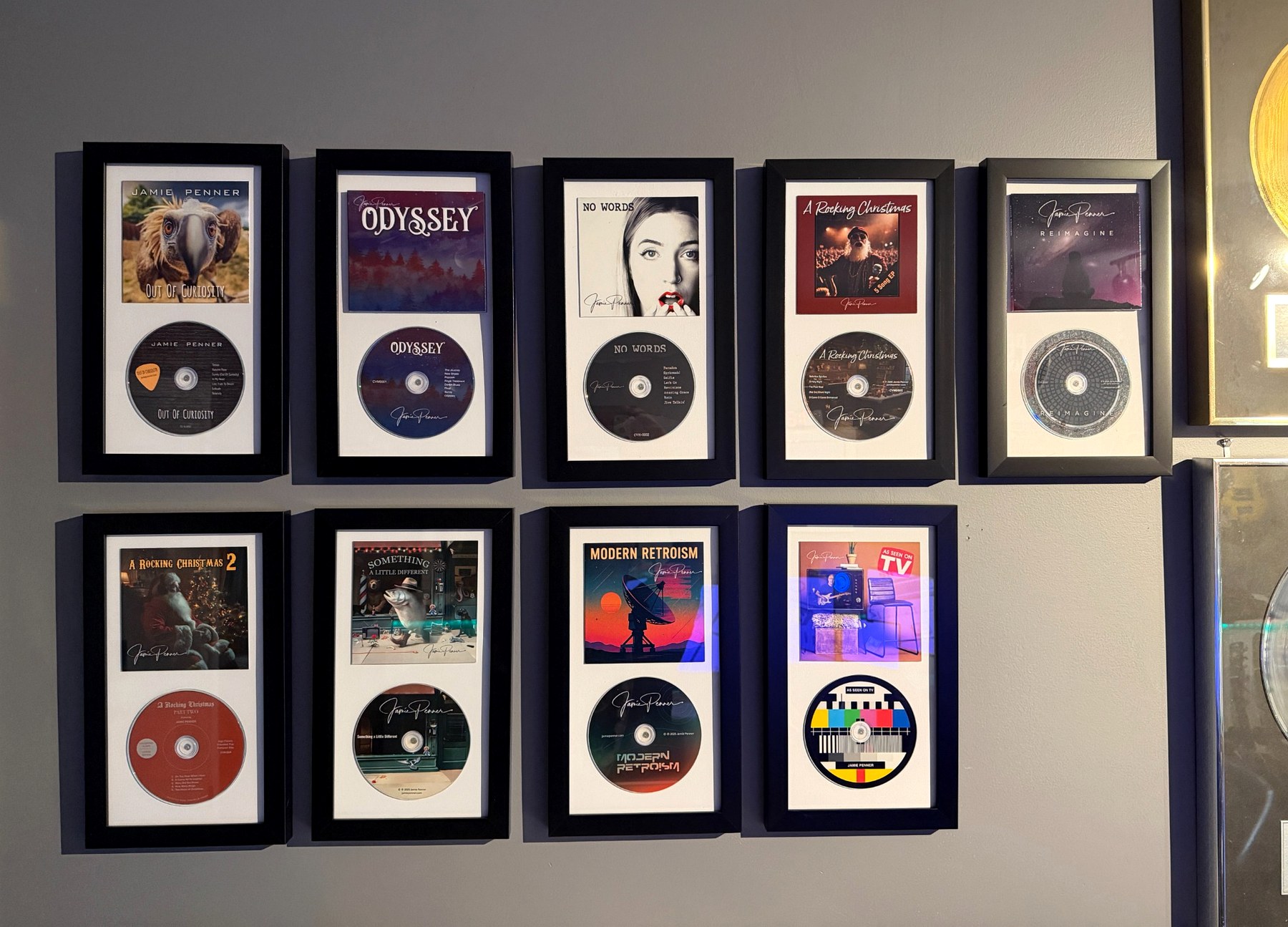
Every release on this wall represents months of work completed during evenings and weekends around a full-time career. Looking over at it while working on the next album is a reminder that every one of them once felt impossible.
There is a strange feeling that comes over me when I hear that one of my songs has been played on the radio somewhere I've never been. I'll be sitting in my studio on Vancouver Island, the same room where I recorded the song in the first place, and somewhere in Germany or Australia or Brazil a stranger is hearing it for the first time. I've been making music long enough now that I probably shouldn't be surprised by this. I still am, every time.
The studio became my stage
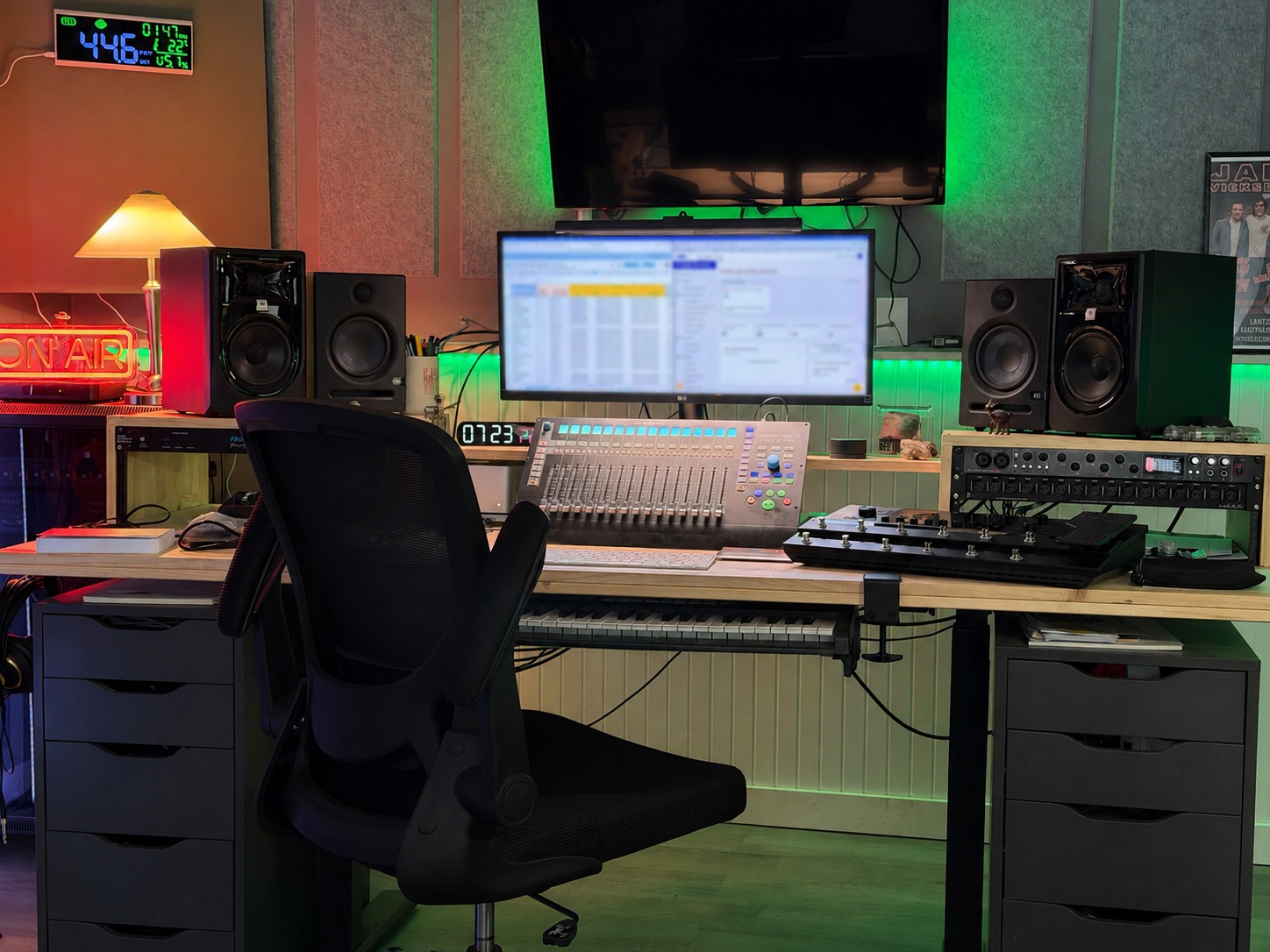
Every now and then someone asks me a question that sounds simple enough. "What's the best way to support your music?" The funny thing is, my answer has changed over the years. Ten years ago I would have said, "Come to a Christmas show." These days that's a little difficult, because I don't play live shows. My studio has become my stage instead. Every album I've released has been written, recorded, produced, mixed and mastered in that room. It's where ideas become songs, where songs become albums and, occasionally, where I stare at a computer screen wondering why something that sounded great yesterday suddenly doesn't today. That's just part of the process.
Start by listening
Because I don't tour, people often assume the only way to support what I do is to buy something. If you do, I'm genuinely grateful. But that isn't actually where I tell people to start. I tell them to listen, and to really listen, not because I'm chasing another stream but because everything else follows from that one thing. If a song connects with you, the rest happens on its own. You might play it again tomorrow, add it to a playlist, tell a friend to check it out, or get curious enough to go looking for another album. That is how independent music grows, one listener at a time. Somebody hears a song, tells a friend, and suddenly there are two people listening instead of one. There's no advertising campaign behind it. It's just word of mouth.
What streaming is really for
It would be easy to be cynical about streaming, and plenty of artists are. You've probably seen the headlines about musicians earning fractions of a cent per play. They aren't wrong. When people ask me what I actually make from a single stream, they're usually shocked by the answer, which works out to somewhere around a tenth of a penny by the time it reaches me, depending on the platform and a handful of other factors. No independent musician is buying a new guitar because one person played one song once. That part is true.
The mistake people make is assuming that because streaming pays so little, it doesn't matter. It matters enormously, just not in the way most people think. Streaming isn't really about the money. It's about discovery. It's how someone on the other side of the world stumbles across my music without either of us ever leaving home, how a playlist curator finds a track, how one song leads a curious listener into the rest of the catalogue. Without it, most of the people reading this probably wouldn't know my name at all. So if a headline about royalties ever tempts you to stop, please don't. Keep listening, keep discovering new artists, keep building playlists. Independent musicians need that as much as anything.
The things that cost nothing
A few other things help too, and most of them are free. Following an artist on Spotify, Apple Music or YouTube tells those platforms you want to hear more, which makes it far more likely you'll actually find out when the next release arrives. Saving a song rather than just playing it once signals that it meant something. Sharing a track with a friend is still one of the most valuable things you can do, because people trust other people far more than they trust an advertisement. And leaving a comment or sending a short message, which sounds like the smallest gesture of all, is anything but. Recording can be a lonely business. You can spend months building something without any idea whether it will land with a single person. Then one message arrives, from someone who tells you a song reminded them of a certain time in their life, or got them through a hard week, or simply made the drive home a little better. You remember that message long after you've forgotten the streaming numbers.
There's one more free thing that matters more than most people realize, and it's one a lot of listeners have forgotten they can do. If you still listen to the radio, you can request a song. I get airplay in countries all over the world, and the reason a track stays in rotation usually isn't the station manager or some big promotional push. It's a listener picking up the phone, sending a message or filling out an online request and saying, "Play this one again." That single request tells a station the music is connecting with real people, and it's often what keeps a song on the air long after it first slipped into a playlist. For an independent artist with no promotional muscle behind them, a listener asking to hear a song is one of the most powerful things that can happen.
Why I still make CDs
Which brings me to the question people eventually ask. If streaming pays so little, why do I still sell CDs? The answer is hanging on the wall of my studio. Every album I've released is framed up there, and sometimes I'll glance over at that wall while I'm working on the next one. It reminds me that each one seemed impossible at some point. Every frame represents hundreds of hours squeezed into evenings and weekends around a full-time career, and not just the writing and recording and mixing and mastering. There's the artwork too. I've never believed the cover was simply something to protect the disc inside. The artwork is part of the album. It's the first thing you experience before you hear a single note, and often the image that stays with you long after the music has finished. I could have wrapped every album in the same plain package, a silver disc and some black lettering, and technically it would hold exactly the same music. It just wouldn't feel finished. Even now, when hardly anyone owns a CD player, I like knowing that someone can hold one of my albums, look through the credits, look at the design and enjoy the whole thing as a complete piece of work.
Buying a CD or a digital album also happens to be the most direct financial support an artist like me can receive. For someone who doesn't tour, that direct support is what helps fund whatever comes next. There's no promoter taking a cut, no record company writing cheques, and no merchandise table after the show, because there is no show. There's just the next album waiting to be made.
There isn't just one right way
So if you've ever wondered how to support an independent musician, that's my honest answer. Listen, discover, follow, save the songs you enjoy, share them with your friends, and go a little deeper than the first track you hear. And if you ever decide an album is worth owning, on CD or as a download, know that it genuinely helps, not because it makes anyone rich but because it gives independent artists the chance to keep going.
If you've listened to my music, shared it with someone else, bought an album or simply told a friend about it, thank you. Every one of those things has helped me continue making music, and I appreciate it more than you probably realize.
Continue exploring
From the article into the music.
Explore As Seen on TV
Hear 45-second previews and read the story behind the current release.
CatalogueBrowse all music
Move through the full discography, including albums and seasonal releases.
ShopCDs and WAV downloads
Purchase physical releases, digital albums, singles, and bundles directly.
LicensingMusic for creative projects
Ask about direct sync or master-use licensing for film, video, podcasts, games, and other media.
Continue reading
One Song, Several Royalties: What Canadian Artists Need to Know
Releasing music and collecting everything it earns are two different jobs. Here is how the main royalty streams fit together for an independent Canadian artist.
Read the story →